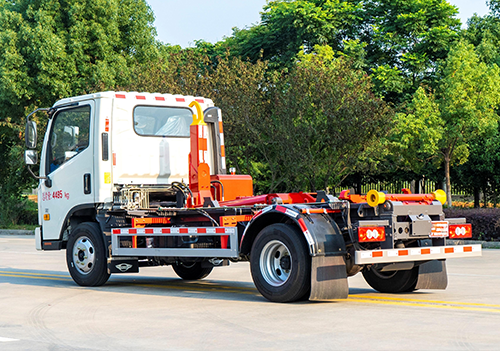
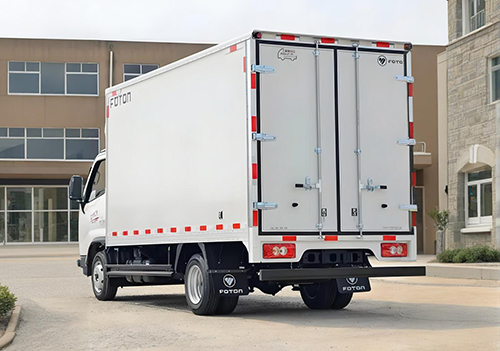
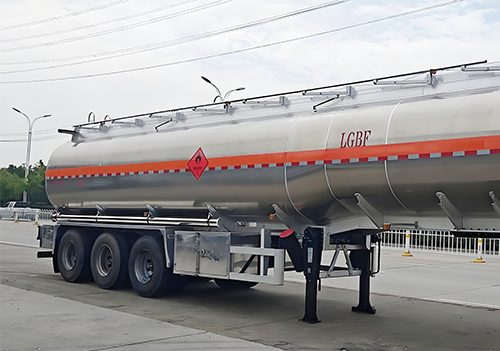
Garbage trucks may perform the same broad task - collecting and transferring waste - but their body structures and loading mechanisms can be very different. A compactor truck compresses waste inside a sealed body, a swing arm truck lifts detachable containers using hydraulic arms and chains, while a hook arm truck uses a hydraulic hook mechanism to pull detachable containers onto the chassis.
The main difference is therefore the way waste is loaded, contained, and discharged. A compactor lorry focuses on compression and enclosed waste storage. A swing arm garbage truck works with detachable bins lifted by swing arms. A hook arm garbage truck uses a telescopic hook-lift mechanism for detachable containers. Vehision currently offers all three systems within its garbage truck product range.
Understanding these mechanical differences makes it easier to compare capacity, loading method, container configuration, compression capability, and hydraulic equipment before selecting a waste-handling vehicle.
What Is a Compactor Lorry and How Does It Work?
A compactor lorry uses a hydraulic compression system to reduce the volume of waste after loading.
Vehision's compactor garbage truck uses a sealed garbage compartment made from high-strength steel. The body contains a push plate and filling mechanism, while the hydraulic system operates the compression and loading components. The product page lists oil pumps, hydraulic cylinders, multi-way valves, a hydraulic oil tank, filters, and related components as parts of the hydraulic drive system.
The compression function is the main structural difference from detachable-container trucks.
Vehision states that its compactor system uses two-way garbage compression and can achieve a compression ratio of up to 1:2.5. The compressed waste density is listed at more than approximately 600-800 kg/m³. A dedicated sewage collection system is also incorporated into the body design to collect liquid generated during compression.
The current product range includes models from 5.3 CBM through 26 CBM, as well as a 47 CBM compression garbage container trailer. Different rear loading devices can also be configured, including equipment compatible with 240 L bins and other loading structures.
For buyers searching for truck mounted garbage compactor equipment, the important distinction is that the waste remains within a fixed compaction body rather than being handled primarily as a detachable container.
How Does a Swing Arm Garbage Truck Work?
A swing arm garbage truck uses hydraulic swing arms and lifting chains to raise and lower a separate waste container.
Vehision's current swing arm product uses hydraulic operation together with alloy-steel lifting chains. Hydraulic support legs stabilize the vehicle during container handling, while the hydraulic system includes control valves, cylinders, and an oil tank.
The garbage container and truck chassis remain separate units.
The current product page lists container capacities of 3, 5, 6, 8, 10, 12, 15, and 16 m³. Containers can be configured as ground-type or pit-type units, and the truck supports self-loading and self-unloading functions through the hydraulic system.
This detachable design also means one truck can coordinate with multiple compatible containers.
Individual models show how the general system is implemented. Vehision's 6 CBM and 10 CBM swing arm trucks use Dongfeng chassis configurations with integrated hydraulic lifting systems. Their product pages describe hydraulic pumps, multi-directional control valves, cylinders, balance valves, and pipelines as the primary operating components.
For searches around swing arm truck, this hydraulic arm-and-chain container handling method is the defining feature.
How Does a Hook Arm Garbage Truck Differ?
The hook lift system also works with detachable containers, but its loading mechanism differs from the swing arm design.
A hook lift truck uses a telescopic lifting arm with a grappling hook. The mechanism engages the container and draws it onto rear guide rails under hydraulic power. Locking components then secure the container on the chassis.
Vehision's hook lift system includes an arm-pulling cylinder, telescopic arm, hook, rear guide rail wheels, hydraulic connectors, and locking hooks. The hydraulic system combines multi-way valves, cylinders, and an oil tank.
The general category lists container capacities from 2 m³ to 28 m³. Control can be manual or remote, and the category specification lists loading and unloading times of no more than 60 seconds.
Individual models cover different load classes. The Foton H2 Hook Lift Garbage Truck lists an upper-equipment loading capacity of 5,000 kg, while the larger Dongfeng Hook Arm Garbage Truck lists a 10-ton upper-equipment capacity and optional 3-7 m³ waste containers.
This makes the hook arm garbage truck mechanically distinct from a swing arm truck even though both can use detachable containers.
Compactor vs Swing Arm vs Hook Arm Garbage Truck
The three truck types can be compared by looking at their basic working principles.
| Feature | Compactor Garbage Truck | Swing Arm Garbage Truck | Hook Arm Garbage Truck |
|---|
| Main mechanism | Hydraulic compression | Hydraulic swing arms and lifting chains | Hydraulic telescopic hook arm |
| Waste body | Primarily fixed body | Detachable container | Detachable container |
| Compression | Yes | No primary compaction system | No primary compaction system |
| Current Vehision capacity examples | 5.3-26 CBM truck models | 3-16 m³ containers | 2-28 m³ category range |
| Main hydraulic function | Loading and compressing waste | Raising/lowering container | Pulling, loading and tipping container |
| Multiple detachable containers | Not the core design | Supported | Supported |
The compactor truck is the most different of the three because its main purpose is to reduce waste volume inside the vehicle body.
Vehision's compactor design can reach a stated compression ratio of 1:2.5. The body also incorporates a push plate, filling mechanism, hydraulic drive system, electronic controls, and dedicated wastewater collection.
The swing arm truck does not primarily compress waste. Instead, its hydraulic arms and chains lift compatible containers. The category supports both ground-type and pit-type waste bins, and a single chassis can coordinate with multiple containers.
The hook lift truck also separates the container from the chassis but uses a hook-and-telescopic-arm system rather than swing arms and chains. This difference changes the mechanical interface between the truck and container and is one reason the two categories should not be treated as interchangeable names.
FAQ About Compactor, Swing Arm and Hook Arm Garbage Trucks
What is the main purpose of a compactor lorry?
A compactor lorry compresses collected waste inside an enclosed body. Vehision's system uses hydraulic two-way compression with a stated compression ratio of up to 1:2.5.
Does a swing arm garbage truck compress waste?
The standard Vehision swing arm truck is designed around hydraulic lifting and detachable waste containers rather than an integrated waste compression system.
What is the difference between a swing arm and a hook arm garbage truck?
A swing arm truck lifts containers using hydraulic swing arms and chains. A hook arm truck uses a telescopic hydraulic arm and hook to pull a compatible container onto the truck chassis.
Can one truck work with more than one container?
Vehision's swing arm and hook lift systems both support detachable-container operation, allowing a compatible truck to work with multiple containers.
What container capacities are available?
Vehision lists swing arm containers from 3 m³ to 16 m³. The general hook lift truck category lists capacities from 2 m³ to 28 m³. Compactor truck models are available in several body sizes, including 5.3, 5.8, 10.5, 13, 15, and 26 CBM models.
Conclusion: Comparing Garbage Truck Systems by Function
There is no single garbage truck body design that performs every waste-handling function in the same way.
A compactor lorry is built around hydraulic waste compression and a sealed body. A swing arm truck uses hydraulic arms and chains to handle detachable containers. A hook arm garbage truck uses a telescopic hook mechanism and is available across several container and lifting-capacity configurations.
Vehision offers all three systems, so buyers can compare the actual waste type, container format, required capacity, loading mechanism, and compression requirements against the specifications of each product family rather than selecting a truck from its name alone.
 English